
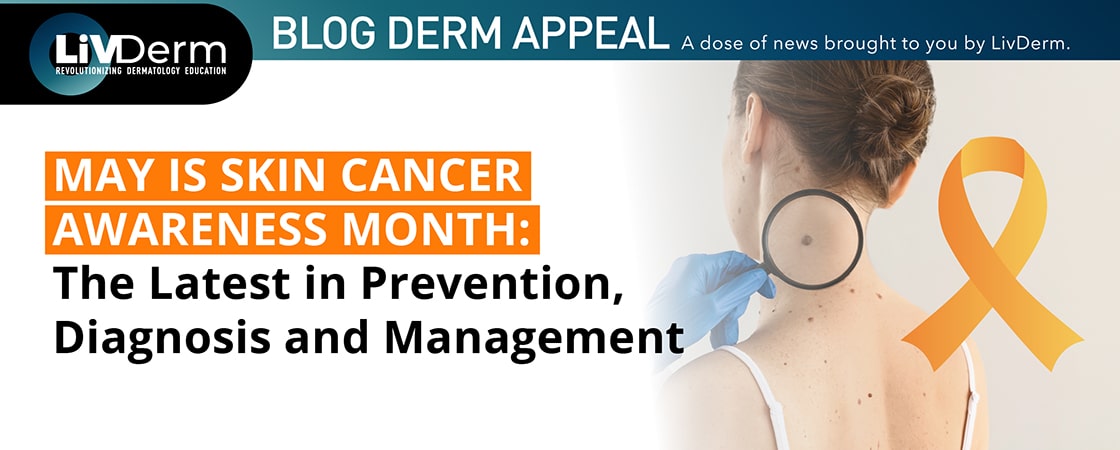
Skin Cancer Awareness Month takes place every May in the U.S. and Canada, providing an opportunity to educate the public about the risks of skin cancer. Although highly preventable, skin cancer remains the most common cancer, with millions of cases diagnosed annually in the U.S. With an emphasis on sun safety, regular skin checks, and early detection, this initiative plays a vital role in educating the public about preventative measures in an effort to save lives. Meanwhile, scientific advances continue to reshape how skin cancers, including melanoma, are diagnosed and treated.
Raising Awareness
During Skin Cancer Awareness Month, the American Academy of Dermatology (AAD) leads efforts to educate the public, sponsoring skin cancer screenings, encouraging social media campaigns, and supporting community and corporate engagement.
The organization also provides educational resources, patient support, and advocacy programs to help individuals affected by melanoma and other skin cancers. These initiatives aim to empower patients, caregivers, and the public to take proactive steps in prevention and early detection.
On Melanoma Monday, May 6, 2026, the AAD encourages individuals to perform skin self-exams and learn the ABCDEs of melanoma:
- Asymmetry
- Border irregularity
- Color variation
- Diameter (larger than a pencil eraser)
- Evolving size, shape or color
Awareness efforts may also extend to community engagement, with individuals encouraged to share educational resources, participate in events, and promote prevention strategies.
Because melanoma is highly treatable when caught early, dermatologists emphasize that early detection is critical, and recommend key preventive measures:
- Regular skin self-exams to identify new or changing moles
- Sun protection, including sunscreen, protective clothing, and avoiding peak UV hours
- Awareness of risk factors such as fair skin, family history, and excessive UV exposure
Prevention, Diagnosis, and Management
Dermatologic professionals are advancing beyond education alone, with significant progress in prevention, diagnosis, and treatment. More than five million Americans are diagnosed with skin cancer each year — more than all other cancers combined — underscoring the urgency of continued innovation.
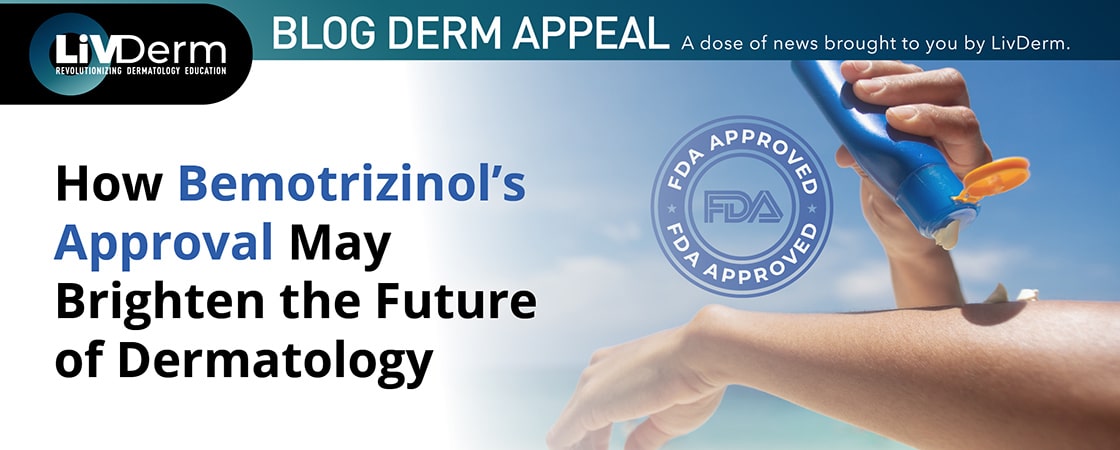
The passage of the Safe Sunscreen Standards Act signals a major development in skin cancer prevention and is expected to accelerate the approval of new ultraviolet filters in the U.S. No new sunscreen agents have been approved since 1999, explained Darrell Rigel, MD, MS, clinical professor at New York University and adjunct clinical professor at UT Southwestern. Rigel noted that bemotrizinol (BEMT) is expected to gain approval soon, and will offer a broad-spectrum, cosmetically acceptable option in sun protection that may enhance patient adherence and photoprotection.
Recent advances in risk stratification and personalized care are also transforming the diagnosis and management of nonmelanoma skin cancer. Gene expression profile (GEP) testing is emerging as a valuable tool in assessing metastatic risk in squamous cell carcinoma and guiding treatment decisions, including the use of adjuvant radiation therapy. For basal cell carcinoma, the continued use of hedgehog pathway inhibitors such as vismodegib and sonidegib, continue to improve outcomes in advanced disease. Meanwhile, immunotherapies, particularly PD-1 and PD-L1 inhibitors, are reshaping treatment paradigms for squamous cell carcinoma and Merkel cell carcinoma, with newer agents demonstrating promising efficacy. Dr. Rigel also highlighted the clinical utility of polyomavirus antibody testing in Merkel cell carcinoma, which can aid in monitoring disease progression.
New Developments in Melanoma
Diagnostic advancements are particularly important in the treatment of melanoma. Nearly 105,000 new cases were diagnosed in 2025, with approximately 8,500 deaths, reinforcing the importance of early detection.
In addition to the traditional ABCDE criteria, tools such as dermoscopy and AI-assisted imaging are enhancing diagnostic accuracy when used in combination with clinical expertise. GEP testing further supports prognostic assessment and decision-making regarding sentinel lymph node biopsy.
Dr. Rigel pointed out that advances in systemic therapies have transformed outcomes in advanced melanoma, with approximately half of patients achieving long-term survival of 8 to 10 years. Taken together, these developments underscore a rapidly evolving landscape in skin cancer care, marked by increasing precision, improved survival, and continued innovation.
“Melanoma is no longer an automatic death sentence,” he said. “If you have metastatic disease with the new treatments, there’s some exciting things out there.”
Concluding Thoughts
Skin Cancer Awareness Month serves as a powerful reminder that prevention and early detection remain the most effective tools in reducing the burden of skin cancer. Alongside continued innovation in diagnostics and therapeutics, clinicians are better equipped than ever to improve outcomes and expand treatment possibilities.
Visit the LiVDerm Cutaneous Oncology Digital Education Hub for more information and resources to support clinical decision-making, including slides from the 2026 South Beach Symposium.