
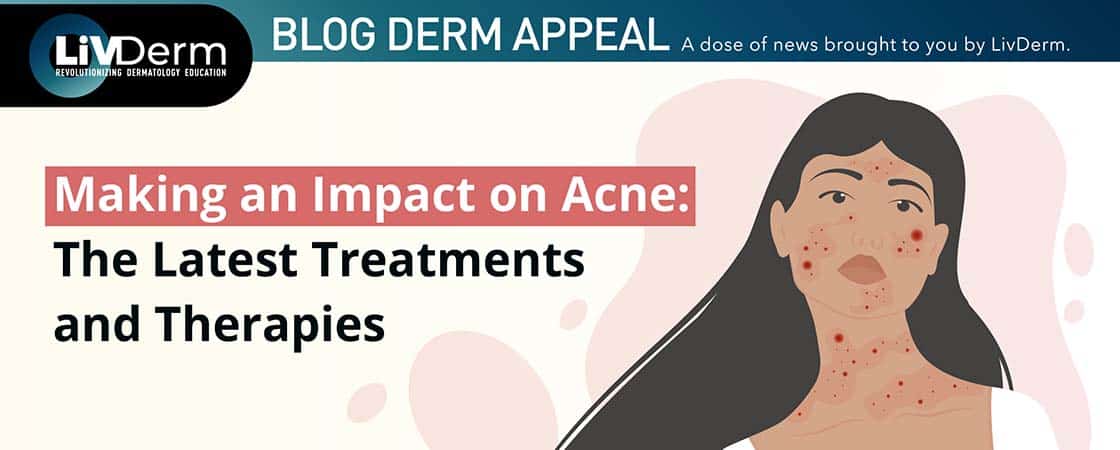
Acne vulgaris affects approximately 85% of teenagers, although it can occur in any age group. Usually beginning during puberty, acne can persist well into adulthood. Acne occurs when hair follicles become clogged with oil and dead skin cells, leading to whiteheads, blackheads, and inflammatory lesions that can be exacerbated by hormonal changes, excess oil production, and bacteria on the skin.
June is officially recognized as Acne Awareness Month, making it an ideal time to reframe the common perception of acne and learn more about its causes, symptoms, and evolving treatment options.
Acne, a complex inflammatory skin condition, is not simply a cosmetic concern; it affects people of all ages, ethnicities, and socioeconomic backgrounds. The good news is that ongoing advances in medicine, science, and technology are making acne treatments increasingly effective, offering clinicians a growing range of therapies, combination approaches, and procedural techniques to improve patient outcomes.
Managing Acne
In its 2024 Guidelines of Care the American Academy of Dermatology highlighted evidence-based recommendations for treating acne. These guidelines take into consideration recent clinical advances that initiated a shift toward combination therapies, microbiome‑friendly agents, and early aggressive treatment to prevent scarring and long-term psychosocial impact.
AAD-Endorsed Treatments for Acne:
- Topical benzoyl peroxide and topical retinoids (tretinoin, adapalene, tazarotene, trifarotene) as first-line therapies, either alone or combined with topical antibiotics
- Topical antibiotics such as clindamycin to reduce Cutibacterium acnes colonization
- Oral doxycycline for moderate-to-severe inflammatory acne, while avoiding systemic antibiotic monotherapy
- Oral isotretinoin for severe, scarring, or treatment-resistant acne
- Conditional options including topical clascoterone, salicylic acid, azelaic acid, oral minocycline, sarecycline, combined oral contraceptives, and spironolactone
The AAD also offers recommendations of best practices for acne treatment, including:
- Combining topical therapies with different mechanisms of action
- Limiting prolonged systemic antibiotic use
- Utilizing intralesional corticosteroids for large inflammatory lesions to accelerate resolution and reduce scarring
New and Emerging Therapies
In many ways, the future of acne treatment is already here, as new and emerging therapies continue to move from research and clinical trials into everyday practice. Christopher G. Bunick, MD, PhD, associate professor of dermatology and translational biomedicine at Yale School of Medicine and medical chair of the South Beach Symposium, recently offered insights into innovative therapeutic approaches for inflammatory skin conditions.
“One of the biggest concerns about systemic therapies like oral antibiotics has been how they hurt the gut microbiome,” Dr. Bunick noted, adding that recent developments in acne treatments have introduced a narrow-spectrum oral antibiotic called sarecycline, which minimizes disruption to gut bacteria. “It does a really good job of avoiding hitting the gram-negative bacteria in our gut,” he said, emphasizing its role as a more gut-friendly option for managing moderate-to-severe inflammatory acne.
Even as researchers continue to refine pharmacologic therapies, procedural treatments are becoming increasingly valuable when it comes to acne management. Patients who do not respond to conventional therapies, or who are hesitant to use oral isotretinoin, may benefit from advanced laser technologies as an alternative treatment option.
Because these lasers specifically target sebaceous glands, they can effectively reduce acne severity and inflammation.
“One of the benefits of using advanced lasers that target and destroy these sebaceous glands is that it helps acne, and some of the data shows that these lasers can have efficacy on par with oral isotretinoin,” Dr. Bunick observed, adding that these laser treatments can help alleviate post-acne scarring, bridging the gap between medical and aesthetic dermatology.
Faster Healing for Better Outcomes
Speaking at this year’s South Beach Symposium, Michael H. Gold, MD, founder and medical director of the Gold Skin Care Center and Tennessee Clinical Research Center in Nashville, explained that newer treatment options are helping patients achieve clearer skin more quickly — an important consideration for a condition that often leaves patients with lesions associated with stigma, depression, and reduced self-esteem.
“What we have to put at the top of our minds is what I call the psychosocial parts of the acne journey,” said Dr. Gold. “People do not like having a lot of acne lesions. They don’t like the stigma associated with it. I take a very strong approach to trying to rid my patients of their acne lesions faster than traditional medicines can.”
While antibiotics and topical therapies remain highly effective, it can take time for patients to see visible improvement. Device-based therapies, including pulsed light and laser technologies that target sebaceous glands and inflammatory pathways, may help patients achieve faster clinical improvement.
“There are a variety of vascular lasers out there that also work very well, because again, they target that [Cutibacterium acnes] with the proper wavelength,” Dr. Gold said. “Then we have something called the short-pulse 1064 nanometer laser, which is a go-to laser in my clinic. It is very well tolerated. It is painless for most patients, and the short-pulse 1064 covers all skin types, which makes it very useful in treating acne.”
According to Dr. Gold, these technologies can also improve texture irregularities and acne scarring.
“Whether we use radiofrequency microneedling, fractional CO2 lasers or fractional non-ablative lasers, we have [options] to take somebody from A to Z and make them happy.”
Concluding Thoughts
Acne may be one of the most common skin conditions worldwide, but its treatment landscape continues to evolve rapidly.
Dermatologists increasingly agree that early, effective intervention is key to preventing scarring and quality of life impact. At the same time, growing interest in microbiome-friendly skincare — including hydrocolloid patches, gentle exfoliants, and products designed to minimize irritation — reflects a broader shift toward more holistic acne management.
The expansion of advanced laser technologies, targeted biologics, microbiome-conscious therapies, and combination treatment approaches represents a new era in acne care, one that is focused on personalization, faster results, and improved patient quality of life.
Some of the latest treatment advances include:
- Sarecycline: A narrow-spectrum oral antibiotic effective for moderate-to-severe inflammatory acne with minimal disruption to gut microbiota
- Sub-microbial dosing and extended-release tetracyclines: Designed to target inflammatory pathways while minimizing microbiome disruption
- Clascoterone cream 1%: Approved for mild-to-moderate acne in patients 12 years and older with strong efficacy and tolerability
- Triple-combination therapies: New formulations combining multiple acne‑targeting agents to address all four pathophysiological pillars
- Emerging therapies in development: Including freshwater sponge technology, fascin inhibitors, and therapeutic acne vaccines
During Acne Awareness Month and all year long, the ongoing mission to find quicker, more effective treatments for acne continues.