
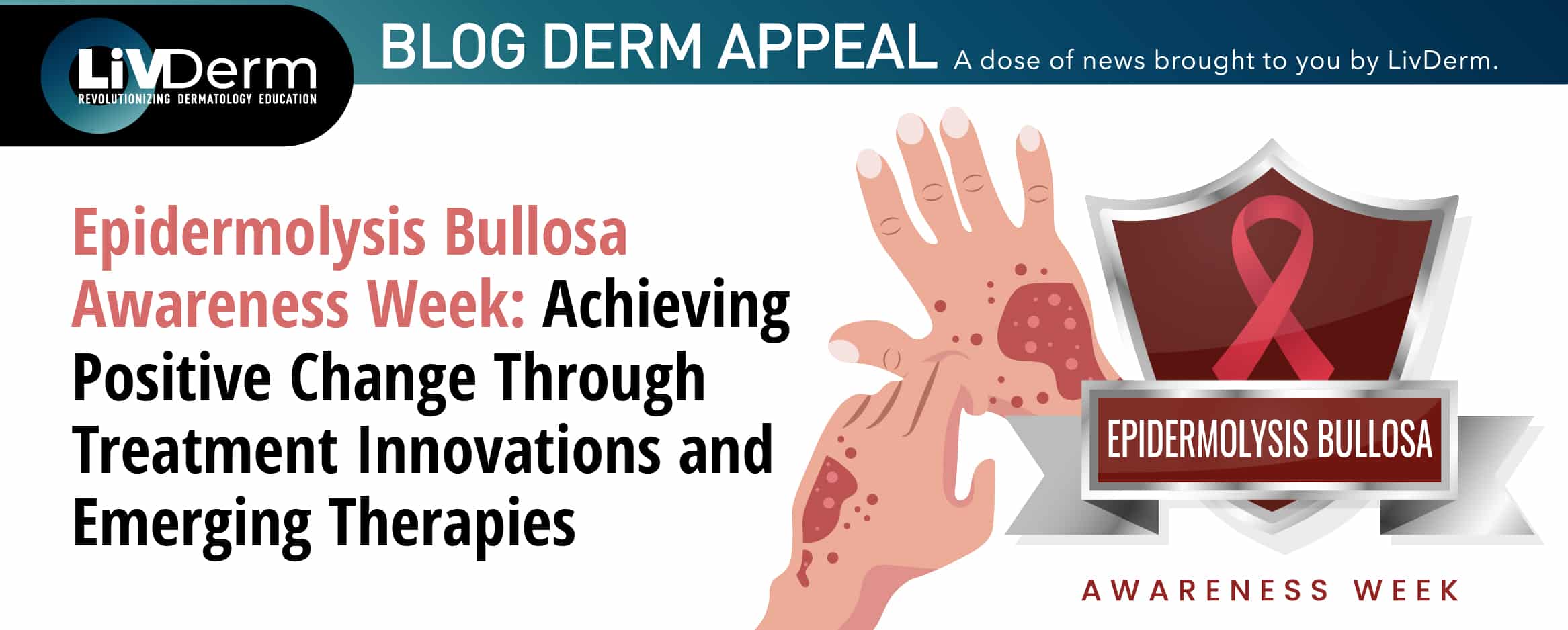
This Epidermolysis Bullosa (EB) Awareness Week, we reflect on the challenges of managing this rare and often devastating group of genetic skin disorders — and recognize how emerging science is reshaping care for this patient population.
Because of its complexity, EB presents unique challenges for both patients and clinicians. In addition to the extreme fragility of the skin and the painful wounds and blisters that define the condition, EB can also affect mucous membranes, leading to complications in the mouth, eyes, and internal organs. Effective care therefore requires highly coordinated, multidisciplinary management that addresses both the physical and emotional burden of the disease.
Expanding Options: B-VEC and the Evolving Role of Gene Therapy
One of the most promising developments in EB care is the FDA’s recent label expansion for beremagene geperpavec-svdt (B-VEC/VYJUVEK®, Krystal Biotech), now approved for dystrophic epidermolysis bullosa (DEB) patients from birth.
B-VEC is a non-invasive, topical gene therapy that delivers two copies of the COL7A1 gene to restore normal collagen VII production. The updated label represents a significant shift toward patient-centered management while maintaining strong efficacy and safety data. By allowing at-home application and simplified wound care, patients and caregivers gain increased autonomy and convenience. Such innovations not only help improve overall quality of life, but can also enhance treatment adherence and long-term disease control for this vulnerable population.
“We believe these changes further reinforce VYJUVEK’s leadership position as the most flexible, convenient, and disease-modifying medicine to treat DEB patients in the United States,” said Krish S. Krishnan, chairman and CEO of Krystal Biotech.
For clinicians, B-VEC highlights the growing role of targeted, patient-centered gene therapies in chronic dermatologic conditions, while also emphasizing the importance of training, follow-up, and patient education in ensuring adherence and optimal outcomes.
Comprehensive, Multidisciplinary Care
Despite advances in therapy, EB remains a multidisciplinary challenge, with foundational care at the core of disease management. Effective treatment requires collaboration among specialists, including dermatologists, wound care experts, nurses, nutritionists, counselors, and psychosocial support teams — all of whom work together to address complications and improve patient quality of life.
Key elements of EB management include:
- Personalized wound care protocols, including protective dressings and gentle cleansing
- Pain and itch management to improve comfort and sleep
- Infection prevention, balancing antimicrobial strategies with skin preservation
- Psychosocial and caregiver support, addressing emotional and lifestyle challenges
At the upcoming 2026 Masters of Pediatric Dermatology (MOPD) Symposium, Anna Bruckner, MD, a leading pediatric dermatologist and EB specialist, will discuss how multidisciplinary teams can integrate evolving therapies into daily clinical practice. She emphasizes the importance of individualized treatment plans, early intervention, and the combination of gene therapy with supportive care to optimize wound healing and patient adherence. Her insights will help clinicians navigate the complexities of EB care while staying aligned with the latest research and therapeutic innovations.
Integrating Adjunctive and Emerging Therapies
In severe forms of EB, genetic mutations have a strong and predictable effect on how the skin functions and repairs itself. Although research has demonstrated that the most effective treatments are targeted therapies that replace missing or faulty genes, proteins, or cells, these approaches remain challenging and costly to implement.
According to Danescu, Negrutiu, and Has (Dermatology and Therapy, 2024), current efforts should focus on integrating newer gene therapy techniques, both in vivo and ex vivo, into everyday clinical care. The authors also emphasize that more affordable repurposed drugs may help reduce disease severity and improve quality of life, particularly for patients with milder forms of EB. These adjunctive therapies can complement gene-based treatments by addressing inflammation, wound healing, and pruritus, ultimately supporting a more holistic approach to patient care.
Looking Ahead: From Awareness to Action
As targeted and corrective therapies continue to advance, EB care is becoming increasingly patient-centered and evidence-driven. Awareness initiatives like EB Awareness Week not only raise visibility for patients and families but also encourage clinical education, collaboration, and research participation.
By staying informed on emerging therapies, gene-based innovations, and multidisciplinary approaches, clinicians can help drive meaningful change in EB care, improving both short- and long-term outcomes for this vulnerable patient population.