
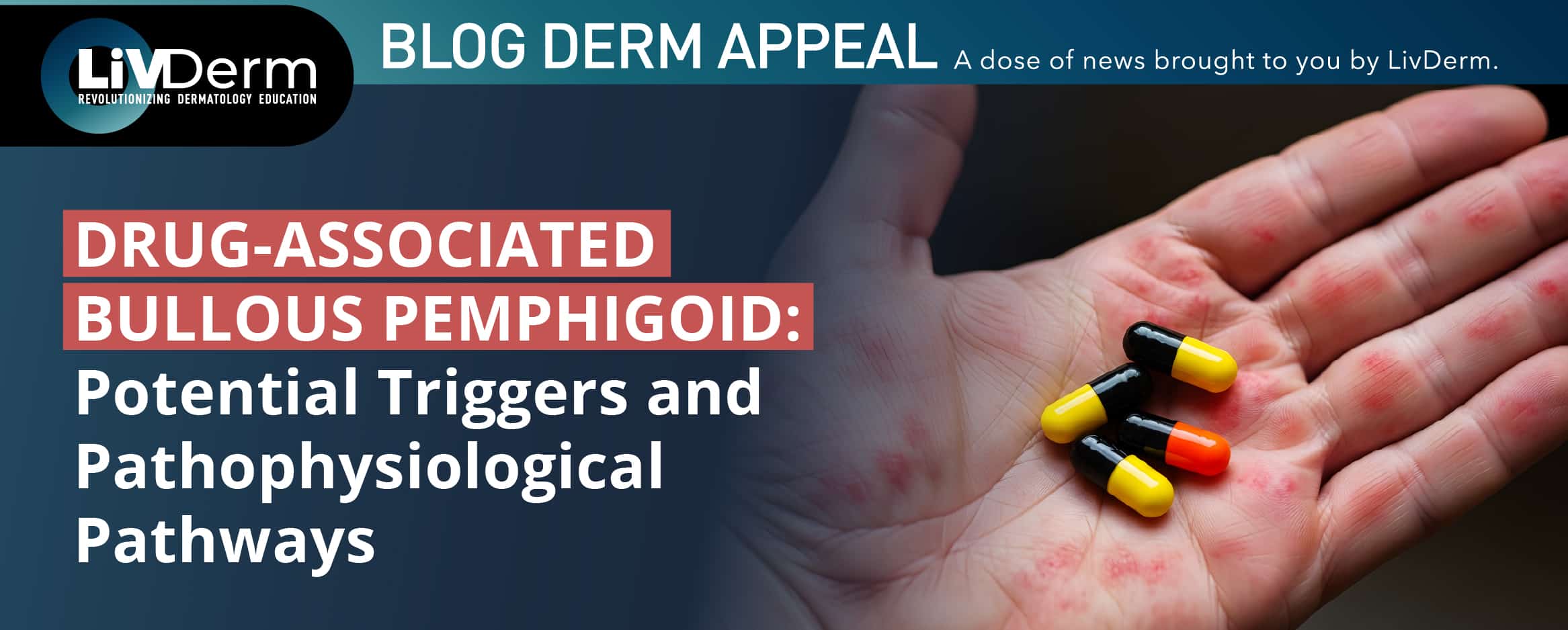
Intense itching, fluid-filled blisters, inflammatory lesions, crusty scabs, and open sores — the symptoms of bullous pemphigoid (BP) can significantly impact quality of life. Patients may experience pain, discomfort, sleep disruption, poor self-image, social isolation, and functional impairment. This rare, chronic-relapsing autoimmune skin condition occurs when the immune system attacks structural components within the skin and can, in some cases, be triggered by certain medications.
Because the exact cause of BP is not fully understood, it’s important to examine the underlying pathophysiological pathways associated with the condition, and to determine whether medications used to treat patients may also act as potential triggers.
Trigger Factors
BP affects fewer than 200,000 people in the U.S., but its symptoms can be severe, particularly in adults over age 60, who often have comorbidities such as dementia, stroke, Parkinson’s disease, and multiple sclerosis. In some cases, BP may be associated with coexisting medical conditions or by the therapies used to manage them.
Light and Radiation Treatments
Phototherapy used to treat certain skin conditions may trigger BP, and radiation therapy for cancer has also been associated with disease onset.
Medical Conditions
Psoriasis, lichen planus, dementia, Parkinson’s disease, stroke, and multiple sclerosis are among the conditions that have been linked to BP.
Medications
Certain medications have been associated with BP, including:
- Diuretics such as furosemide
- Antibiotics such as amoxicillin, penicillin, and ciprofloxacin
- NSAIDs such as aspirin and ibuprofen
- Antidiabetic medications such as sitagliptin (Januvia)
- Cancer therapies such as nivolumab and pembrolizumab
Medications and BP Development
Medication-induced cases represent a clinically significant subset of BP known as drug-associated bullous pemphigoid (DABP). More than 50 drugs have been identified as potential triggers and one nationwide study reported 78 medications associated with increased risk. Several drug classes — including anti-diabetic agents, diuretics, neuropsychiatric drugs, immunotherapy agents, ACE inhibitors, calcium channel blockers, and anticonvulsants — show particularly strong associations.
Lymphocyte transformation tests (LTT) have demonstrated positive results in approximately 60% of patients with suspected drug-related BP, suggesting direct T-cell recognition of drug-modified antigens or cross-reactive epitopes.
While DABP can be difficult to distinguish from idiopathic BP, there are notable differences. Patients with DABP tend to be younger and often respond more rapidly to treatment once the suspected medication is discontinued, with fewer relapses. In contrast, idiopathic BP is typically chronic and relapsing.
Treatment options have historically been limited, often relying on corticosteroids and immunosuppressants, which can increase patient burden by suppressing the immune system and causing serious side effects. However, the recent approval of Dupixent (dupilumab) in June 2025 has expanded therapeutic options for patients with BP.
Key Takeaways
- Bullous Pemphigoid (BP) is a rare, chronic-relapsing autoimmune skin condition caused by immune-mediated damage to the skin.
- It is characterized by subepidermal blisters and inflammatory lesions that can significantly impact quality of life.
- Certain medications may trigger drug-associated bullous pemphigoid, either through systemic use or topical exposure.
- These medications may act as triggers in individuals with underlying genetic susceptibility; identifying and discontinuing the causative agent is a key component of management.