
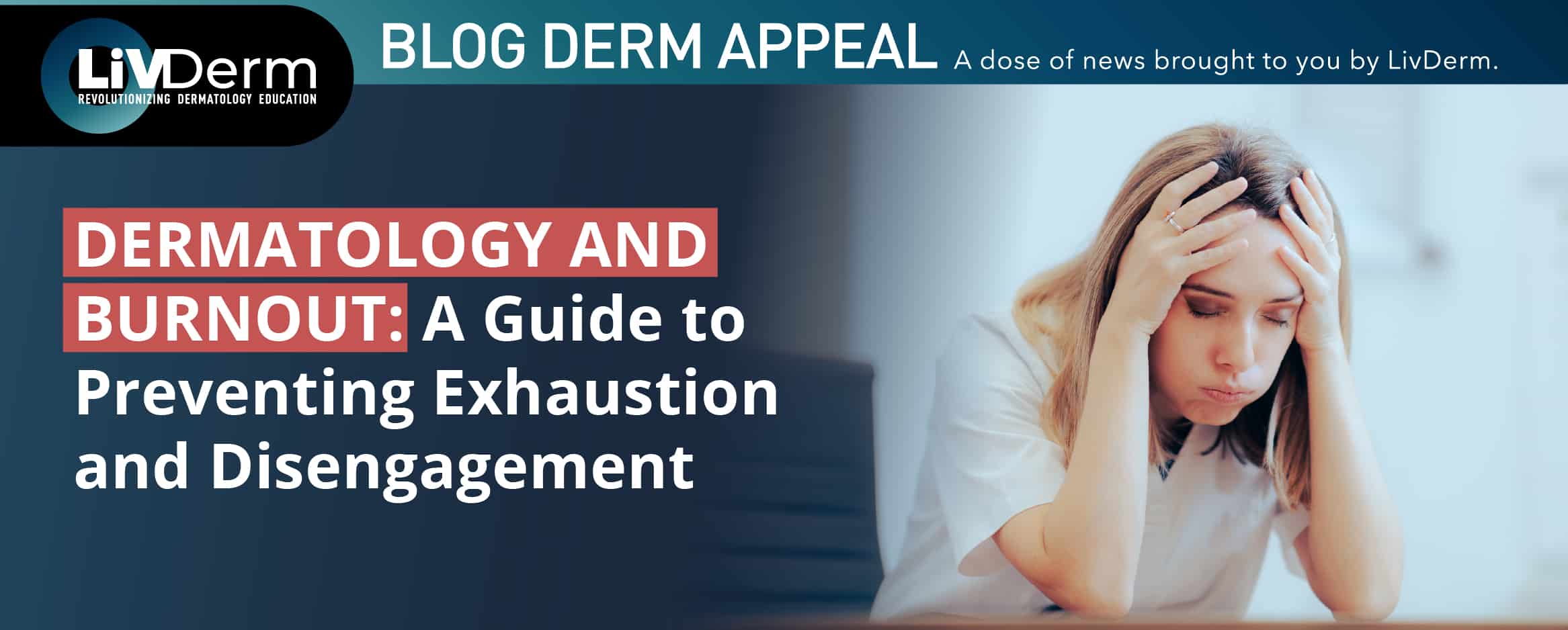
Burnout among dermatologists is a state of physical and emotional exhaustion, disengagement from work, and a reduced sense of personal accomplishment — and it’s more common than many might realize. While rates of burnout tend to be lower in dermatology than in other specialties, they are still concerning and may be rising.
In a 2025 Medscape survey, 46% of dermatologists reported feeling burned out, with 63% of millennials experiencing burnout compared to 42% of older generations. Additionally, 62% of women in dermatology reported feeling burned out, versus 39% of men.
Recognizing and preventing burnout is critical. Physician burnout is associated with increased medical errors, lower patient satisfaction, and decreased work effort. Being proactive can literally save lives — both the clinicians and their patients.
Professional Burnout Symptoms
Burnout is more than just having a few bad days. American psychologist Herbert Freudenberger first defined the syndrome in the 1970s, linking professional burnout to a set of symptoms caused by chronic emotional and interpersonal stressors. Some of the most common manifestations include:
- Emotional Exhaustion: Feeling drained, frustrated, and overwhelmed.
- Depersonalization: Treating patients as objects rather than individuals, leading to a lack of connection.
- Reduced Sense of Achievement: Feeling that efforts are not yielding meaningful results.
- Loss of Motivation: A general sense of apathy toward work.
- Physical Symptoms: Headaches, sleep disturbances, and fatigue.
- Decreased Quality of Patient Care: Increased errors or missed diagnoses due to lack of attention.
Hershel Dobkin, MD, a board-certified dermatologist based in Bexley, Ohio, explains: “The Maslach Burnout Inventory defines it via three dimensions: emotional exhaustion, depersonalization, and a reduced sense of personal accomplishment. Translated from academic to human: You feel empty, you stop caring as warmly as you once did, and you begin to wonder whether medical school was a colossal life mistake.”
What Causes Burnout
Despite the stereotype of dermatology as a stress-free specialty, burnout is a real risk. Rapid technological changes, increasing patient demands, and frequent scientific breakthroughs require dermatologists to constantly learn, adapt, and apply new knowledge — all of which can contribute to stress.
The causes of burnout can be multifaceted, with administrative burdens, work-life imbalances, and emotional demands added to the fast professional pace.
Several factors contribute to burnout among dermatologists, including:
- High Patient Load: Managing a large volume of patients within limited timeframes.
- Bureaucratic Tasks: Administrative duties and paperwork can be overwhelming.
- Insufficient Compensation: Many dermatologists feel that their compensation does not reflect their workload and responsibilities.
- Electronic Medical Records (EMR) Challenges: Complex or insufficient systems.
- Lack of Respect: Feelings of being undervalued by patients and fellow professionals.
Finding Solutions
For dermatologists facing burnout, as well as those who want to take action to avoid it, there are simple solutions that might help. Physical exercise is at the top of most lists, followed by sufficient sleep and enough “alone time” to restore calm and soothe frazzled nerves.
Workplace strategies to support well-being and reduce stress include:
Create a Positive Work Environment: Encourage open communication, teamwork, and respect within the workplace.
Promote a Healthy Work-Life Balance: Ensure that after-hours documentation does not detract from family and hobbies.
Implement Scribes: Real-time documentation allows dermatologists to focus on patient care.
Address EHR-Induced Stress: Streamline administrative tasks to prioritize patient interaction.
According to Dr. Dobkin, genuine human connection with patients is one of the most potent antidotes to burnout available. While he acknowledges that interactions with difficult patients are unavoidable, he has advice for those situations.
“Active listening, empathetic engagement, and an appropriate referral are the tools,” he says. “What is not a tool is carrying the emotional residue of an unwinnable encounter into the next exam room, where a perfectly reasonable patient with a very fixable rash deserves a physician who is fully present. Mental separation is not callousness — it is a professional obligation.”
Final Thoughts
Burnout in dermatology is common but preventable. By recognizing the signs, understanding the causes, and implementing both personal and workplace strategies, dermatologic professionals can protect their well-being, improve patient care, and sustain a fulfilling career.