
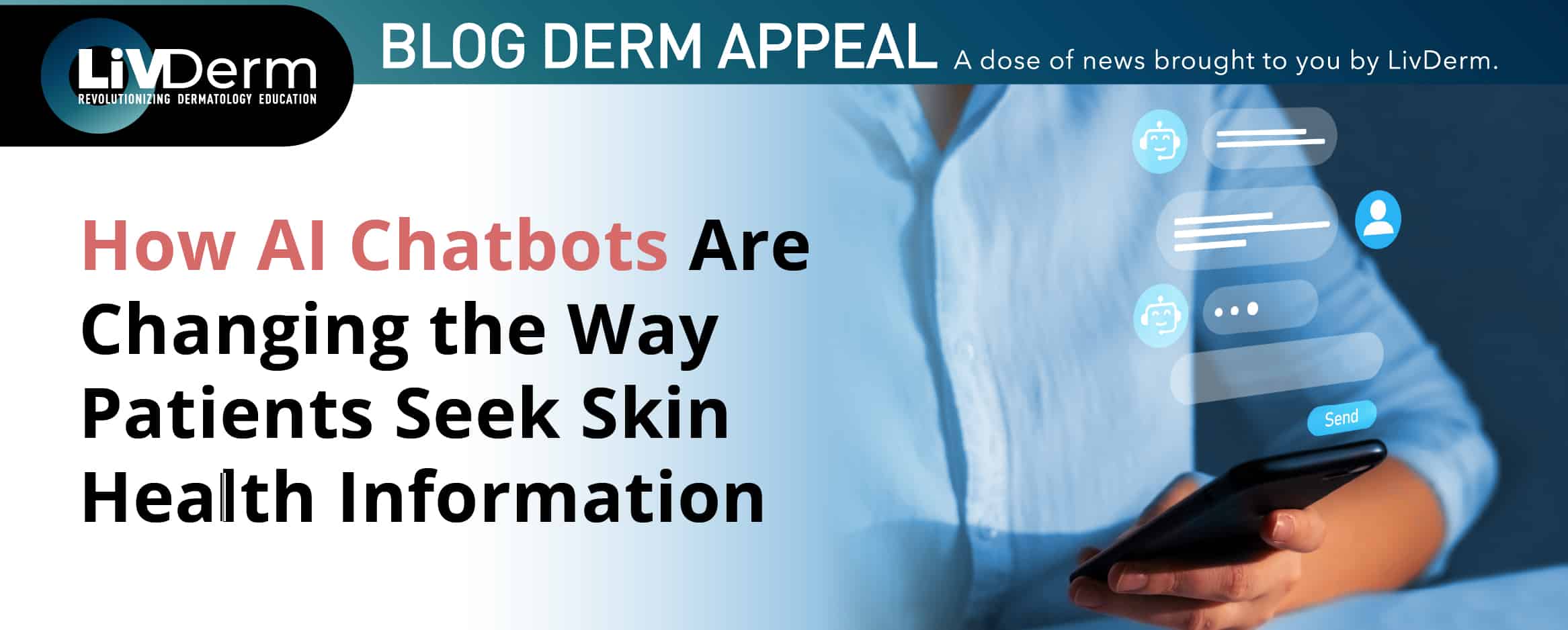
As Artificial Intelligence (AI) becomes increasingly accessible, more patients are turning to AI-powered chatbots for medical advice, often before consulting a clinician. This raises concern for dermatology professionals, especially since emerging research suggests that while chatbots offer moderately accurate responses to common dermatology questions, gaps in accuracy remain.
For clinicians, the challenge lies in understanding both the potential benefits and limitations of AI tools, recognizing how these technologies shaping patient expectations, and being prepared to address any misinformation patients may encounter during AI interactions.
Benefits and Drawbacks
According to a recent study published in the Journal of Drugs in Dermatology, AI chatbots present a mix of benefits and drawbacks when used to seek information on dermatologic conditions.
“While traditional search engines have become cluttered with advertisements requiring time and dedication to find genuine answers and true evidence-based medicine and studies are often locked behind paywalls, these AI alternatives offer quick seemingly thoughtful answers delivered with the ethos of a presumed expert synthesized from the incredible breadth of its training data,” explained Justin W. Marson, MD, a dermatologist and micrographic surgeon at the Cedars-Sinai Medical Group. “For many it is a time saving device that can be accurate most, but importantly not all, of the time.”
Dr. Marson and his colleagues evaluated four widely used AI chatbots to determine how each performed in providing guidance on common dermatologic conditions. These responses were then compared with 280 articles from the American Academy of Dermatology’s patient resource library. Results rated the quality of responses for all four chatbots as “moderate,” particularly when it came to discussing treatment benefits and drawbacks or delivering the patient-level nuance that is central to patient-clinician interaction.
The authors concluded that while AI-powered chatbots may serve as powerful tools to assist medical professionals, they should be approached with caution by patients without medical expertise.
Key takeaways include:
- Nearly 40% of patients report using AI systems for health-related inquiries.
- AI chatbots are increasingly being used as a source of medical advice and information.
- While chatbots’ responses are often moderately accurate, significant room for improvement remains.
Clinical Considerations
AI has the potential to be a useful adjunct in dermatologic care, from encouraging patients with concerning symptoms to seek timely evaluation, to helping dermatologists develop personalized treatment plans. The efficiency of AI in patient support may also allow clinicians to streamline information gathering and report generation, freeing them to focus on patient care. What AI cannot do is replace the clinician–patient relationship, particularly when it comes to clinical judgment, individualized care, and reinforcing evidence-based decision-making.
As AI use becomes more common, dermatologists should remain vigilant about the possibility of patients receiving incomplete or inaccurate information. Patient education is therefore essential. In addition to providing science-based guidance, clinicians may also help guide patients in evaluating health information more critically by encouraging them to:
- Look for reputable sources such as .gov, .org, or .edu websites.
- Ensure treatment or therapy has FDA approval or clearance.
- Check for scientific studies or evidence supporting the information.
- Determine whether dermatologists were involved in the development of the tool or site.
- Ask yourself: Is this information accurate, reliable, and applicable to my situation?
Concluding Thoughts
For dermatology professionals, the goal is not to dismiss AI tools outright, but to understand their limitations and guide patients in using them appropriately. By prioritizing patient education and maintaining a strong foundation in evidence-based care, clinicians can help ensure that AI functions as a supportive asset — rather than a source of confusion.